Way back in the days when internet forums were social media, I haunted the Robert E. Howard Forums like they were a Stygian tomb. My engagement there led to a blogging gig at The Cimmerian (hat tip to Deuce Richardson), which in turn led to launching Frontier Partisans. One forum thread asked us barbarians what martial arts we pursued. I said that I practiced a form of Kenpo, and also a little bit of BJJ and Krav Maga. And firearms training. Someone responded — somewhat testily, I thought — that firearms training is NOT a martial art.
The argument, if I recall correctly, was along the lines that practice with ranged weapons is not a “real” martial art, which struck me as perverse, since training with a concealed carry handgun is probably the most practical form of martial arts application there is in the modern civilian setting — assuming that martial arts are supposed to be training for fighting.
Which they are — and aren’t.
I’m not here to argue the practicality of dojo techniques and all that. If you want to delve into arguments over that, you will find endless opportunities all over the interwebs. What is interesting is that there is a persistent impulse to separate firearms out of martial arts training. This may stem from a false belief that firearms were not part of the martial arts culture of the Far East, and specifically Japan. There is a hoary old historical myth that the samurai rejected firearms as “dishonorable.”
In fact, as soon as matchlock firearms were introduced into Japan by Portuguese traders in 1543, they were adopted enthusiastically, altering warfare in feudal Japan just as the arquebus decisively revolutionized European warfare at the 1525 Battle of Pavia. And there is a Japanese martial art based around the matchlock musket/arquebus: Hōjutsu — The Way of the Gun.
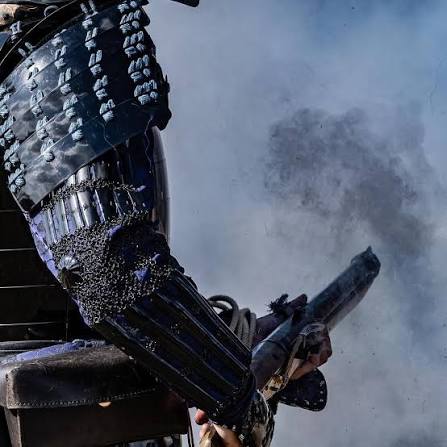
Matt Okuhara aka Gun Samurai, has a YouTube Channel and a book dedicated to exploring the Way.
Matt Okuhara joined the British Army at the age of 18. After several years as a reservist he became a police officer at a national constabulary. He now lives in Japan and works as a martial arts journalist and university lecturer.
He’s a member of the Matsumoto Castle Gun Corps, a display team that shoots feudal-era matchlocks and seeks to preserve the tradition of Hōjutsu.
I have limited knowledge of feudal Japan outside of loving Shogun, but the parallels with firearms proliferation in North America and Africa are hard to miss. The potential of this alien technology was immediately recognized, immediately adopted, and had an immediate impact on “native” warfare. The Japanese, for a variety of reasons, had much great success in acquiring the technology without being overrun by Westerners as were the people of North America and Southern Africa. Of course, the Japanese did some overrunning of their own….
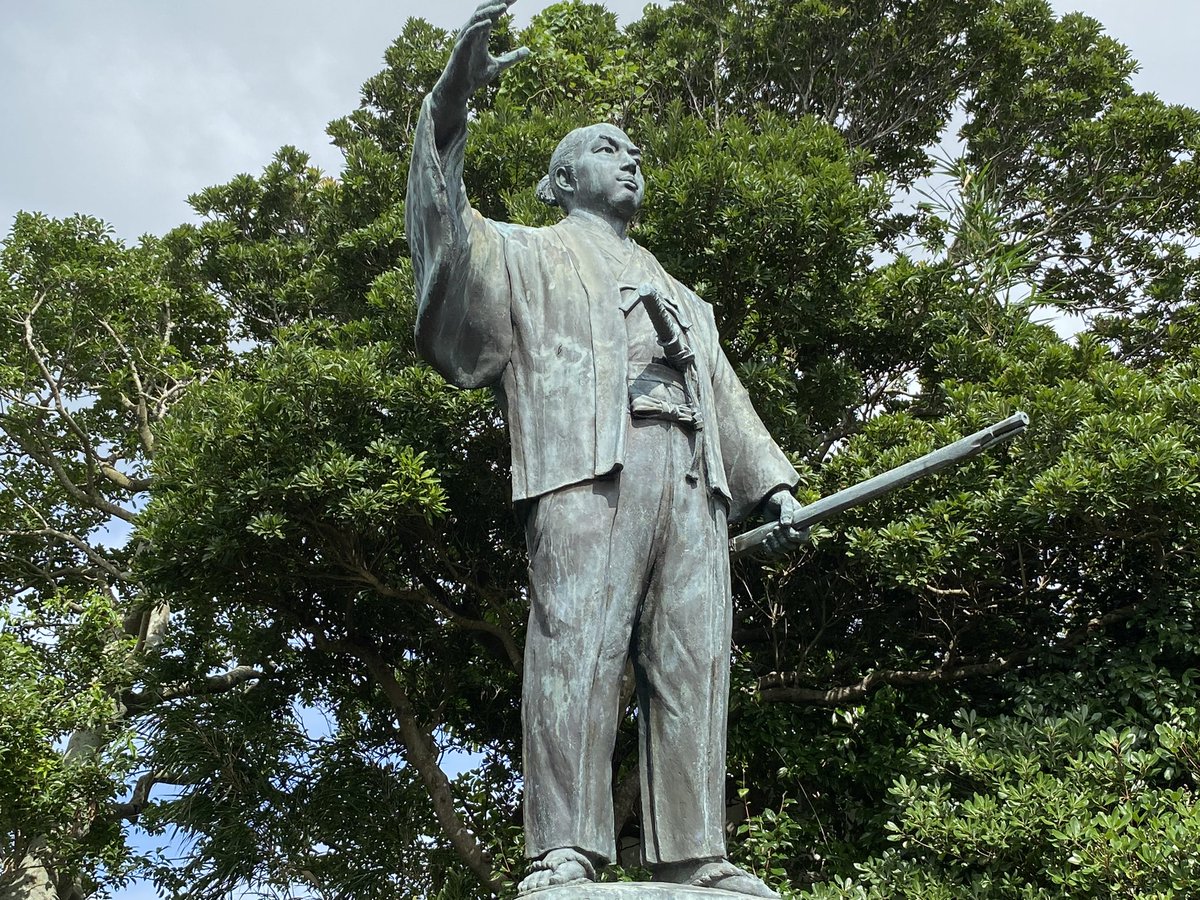
Gun Samaurai: Tanegashima Tokitaka was a teenager and the Lord of his domain. After witnessing the potential of modern gunnery, he ordered his swordsmiths to become gunsmiths.
Okuhara goes into detail on the historical background of Samurai Gunnery here:
Anyways…
Hōjutsu is an archaic martial art; nobody is trying to apply matchlock drill to the modern battlefield. It is about cultural preservation. There is, apparently, a “Modern Hōjutsu” movement, however, that seeks to formalize and meld firearms training and dojo work. One outfit states that:
Training takes place at dojos and firing ranges around the country. There are currently dojos in Alaska, Washington, Idaho, Colorado, Nevada, Texas, California, Georgia, and Italy…
Students are taught the Modern Technique of shooting as developed by Col. Jeff Cooper. Students are also taught kata, weapon retention, empty hand techniques and reigi (protocol) inside the dojo setting. Firearms training has been divided into ten “kyu”, or levels, taking the student from novice to black belt ranks.
The people promoting this have some gravitas and standing: Rod Kuratomi of the Glendale, California, dojo, is a serious martial artist, and “Sensei at Large” Dave Grossman is the author of seminal texts, On Killing and On Combat.
I dunno, though. I have to say that watching the Pistol Kata makes me extremely uncomfortable.
What I do like about the Modern Hōjutsu or Hōjutsu-Ryu concept is the fundamental psychology underpinning The Way of the Gun. I like the mindfulness both of the cultural foundation and the seriousness of the matter in hand. American gun culture could use a little more reverence for protocol and discipline. American gun culture in many quarters is way too casual. I have seen too much clowning — some amazingly stupid shit — go down at Zimmerman Butte, a couple of times so egregious that I felt compelled to intervene rather than just leave. And it’s a sketchy thing to confront demonstrably stupid, armed people…
A dose of formality, though not to a Japanese degree, may be all to the good — it touches the well-regulated militia clause of the Second Amendment. I believe that any firearm owner should train seriously, whether their chosen discipline is truly tactical in nature, or for sporting purposes. Either is valid, and (despite some cranky commentary) there is often considerable overlap in skill-set. The point is that the practice of shooting well is a serious thing, a meaningful thing — and treating it that way is good for us all.
This is the Way — the Way of the Gun.

Matthew Ilseman says
About Japanese history, the Shogunate has a lot of good videos on Youtube.
https://www.youtube.com/results?search_query=the+shogunate
Quixotic Mainer says
Way of the gun is also a good Jessta James song: https://www.youtube.com/watch?v=cbYOJD2AKBo&list=RDcbYOJD2AKBo&start_radio=1
I instruct police combatives, which integrates generic bjj and boxing with firearms retention and close quarters shooting, as well as strikes with the muzzle and butt of long guns. I would absolutely agree shooting is not only a martial art, but a number of them. Fast Draw, CQB room clearing, Long range, and IDPA all get just as niche as martial arts do. I’ve argued strongly that horsemanship is a martial art too though.
The Hojustsu thing is rough… kind of a boomer take on the Grammaton Clerics in Equilibrium.
JimC says
Ouch!
Quixotic Mainer says
I’ve had occasion to meet Col. Grossman, he’s very intense and almost never blinks even during long speeches. I’m sure his eyes get dried out as a result. However I’ve no doubt his heart is in the right place even here.
When I was in basic, one of my cadre figured out I was a bibliophile and ahead on my academics, so he kept chucking me Grossman literature so I’d have something to do aside from polish boots at night. I later attended one of his talks.
JimC says
That is an interesting tic.
Greg Austin Walker says
Years ago I ran an article in Full Contact magazine on just this topic. Kelly Worden wrote it – one of the Pacific NW’ premier martial artists.
I later interviewed Rickson Gracie (GJJ) for our ground fighting issue. When I asked him what his favorite self-defense technique was he replied “My SIG 220.”
We printed that.
JimC says
I recall you telling me that the most effective submission is the SIG 226 technique.
The Black Tyrone says
Absolutely facinating, a very well produced video on Hojustsu. Another subject to include and store in my reservoir of knowledge. LOL
John M. says
There’s always a tension between the “martial” and the “art” in martial arts. Some are better at one than the other, and probably all of them can vary considerably in emphasis from one teacher to the next. In general, firearms training tends to the “martial” side of things, unless you count things like military rifle drill teams. I can see why that throws off the people who come at martial arts from the “art” side.
Though I think a lot of what gets taught as “the technique” in various phases and fads of firearms training can border on “art” even though it isn’t presented as such. And of course the differences between training for competition versus training for combat probably also qualify as a difference between “art” and “martial.”
JimC says
All of this. Art/sport/fighting — only actual fighting is actual fighting. It is important to remember that however realistic our training is, it is only realistic training, it’s not the thing itself. And the more of a game or an art we make our martial practice, the more we have to be aware of this. Our art or our sport may build transferable skills, but they can also create habits that are dangerous for actual combat.
Paul Cantin says
I’ve been doing Japanese karate, particularly Kyokushinkai and then Shito-Ryu since the 1970s.
I was also a police officer from 1978 until 2011, where I also taught combatives. When I was a 4th dan under Master Kubota he was also a gun owner and talked about how important it was to train with them and understand them.
JimC says
That’s some depth of experience. A life-long practice like that is a beautiful thing.
Ugly Hombre says
This is really interesting the use of firearms of course is a martial art most people like me are hobby shooters and plinkers. But it is a martial art and its origin is in war.
Jim Martin the “Hattori Hanzo” of the Colt SAA trained that weapon as a martial art his whole life. He beat many masters of shooting with that gun (except for reloads) in competition. during a decades long stint in practical shooting contests- he was at Big Bear and shot with Jeff Cooper, Eldon Carl, Jack Weaver and more. He has a Zen mentality “seeing is not the same as observing” mind set. Jim met Elmer studied with Bob Howard a old Montana cowboy master gunsmith and learned from a American merc who rode with Pancho..
Kind of a hermit I asked Jim to write a essay on “The practical use of the Colt Mod P” for years but its never got done. Jim is the last of the old time Colt hands imo.
That old gun is still the fastest first shot out of the holster up till now.
The modern pistol Hojitsu looks interesting a bit stiff maybe? bet they would drill the hell out of pistol safety no doubt as well as pulling triggers.
JimC says
Legendary connections in those glory days in Big Bear.
Ugly Hombre says
Yes- it must have been quite something to be in on it. Jim said that in the early days of fast draw there were a hell of a lot of accidents and mistakes people getting shot in the rump with wax bullets etc. Slowly they got it down. guns and leather. They had a contest where they would shuffle the cards to go up against the other guy- auto, double action, or a single action was on the card you shot with your gun had to have all three types. Draw cards to see who would shoot so it might be a auto against a thumb buster like that. ‘Lots of testing what will work”?
They were really competitive learned how too self hypnotize from a doctor of it to focus in and get speed.. etc. Must have been great fun that was long ago when California was a mecca of shooting sports.
Now its the opposite . Darn shame.
Quixotic Mainer says
Lots of guys getting wax slugs on the boot or thigh in Fast Draw still, provided they don’t have holsters with the wax deflector. I’ve competed for years with a guy who’s known as “Dead Leg” for just such a performance. The sound of the shot going off inside the holster is unmistakable!
I’m going to look up Jim Martin, he’s one I don’t know much about, to what sounds like my detriment.
Rick Schwertfeger says
I really like this article. I am fortunate in that there’s is virtually no fooling around at the two ranges I frequent: Capital City Clays and Lone Star Gun Range. Folks at both these facilities are rather methodical about what they’re doing. Capital Clays has never had a firearm injury in 46 years of operation – which is members plus open to the public. The Gun Range enforces “no rapid fire;” and folks follow Cease Fire requests quite fully.
That being said, I am going to try to insert more mindfulness into my already pretty regular processes. Thanks.