 J.R.R. Tolkien was born on this date in 1892 in Bloemfontein, South Africa.
It would be difficult to overstate Tolkien’s importance as a 20th Century writer. It gives the literati fits, but the Professor was undoubtedly the most important writer of the age, as critic Tom Shippey pointed out in his excellent books J.R.R. Tolkien: Author of the Century and The Road to Middle Earth.
His impact was enormous, not only on the genre of fantasy that he for all intents and purposes created single-handedly, but on the culture more broadly, where his environmentalism and suspicion of authoritarian impulses continues to resonate powerfully. In fact, his views coincide nicely with that Edward Abbey quote I posted on New Year’s; Tolkien, too, believed that the ultimate good life was where one neither served nor ruled. One of my favorite quotes from the Professor:
…the most improper job of any man, even saints (who at any rate were at least unwilling to take it on), is bossing other men. Not one in a million is fit for it, and least of all those who seek the opportunity.
The road to Middle Earth led through the trenches of the Western Front during the Great War, and it is likely that only a recurring case of trench fever spared Tolkien from death at the Somme. Young officers had a frightful mortality rate, and most of Tolkien’s friends of that era did not survive the war.
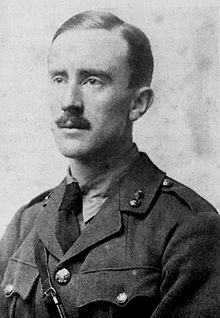
I have explored my own relationship with Tolkien’s work before (Frontier Partisans Of The Mythic Realm). While the roots of Tolkien’s tales are undoubtedly the Germanic myths with which he was exceptionally conversant, they were also leavened with a taste of the North American frontier which was already my own mythic realm by the time I picked up The Hobbit for the first time.
Tolkien acknowledged his love for stories of “Red Indians”:
…there were bows and arrows (I had and have a wholly unsatisfied desire to shoot well with a bow), and strange languages, and glimpses of an archaic mode of life, and, above all, forests in such stories.
One of the joys of reading Tolkien for me was the immersion in landscape. The hellish conditions of the trenches were reimagined as the Dead Marshes and Mordor. Rivendell and the Misty Mountains were recreations of landscapes a young Tolkien explored in Switzerland.
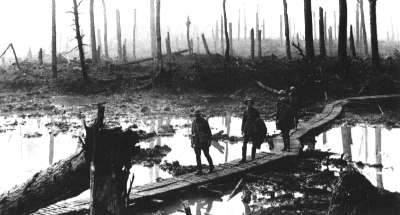
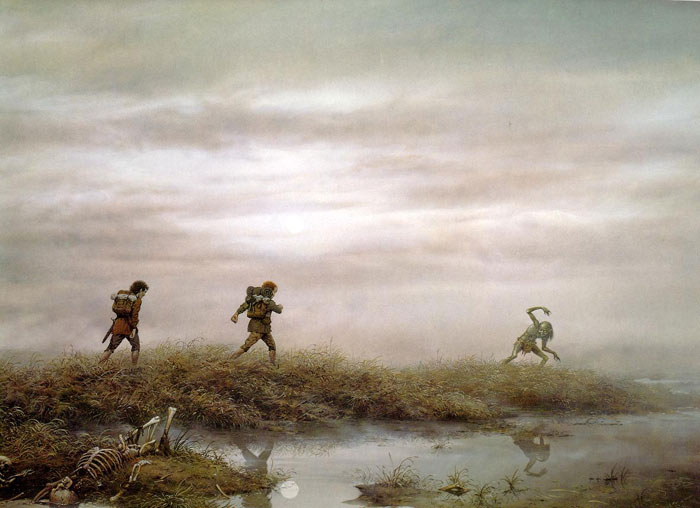

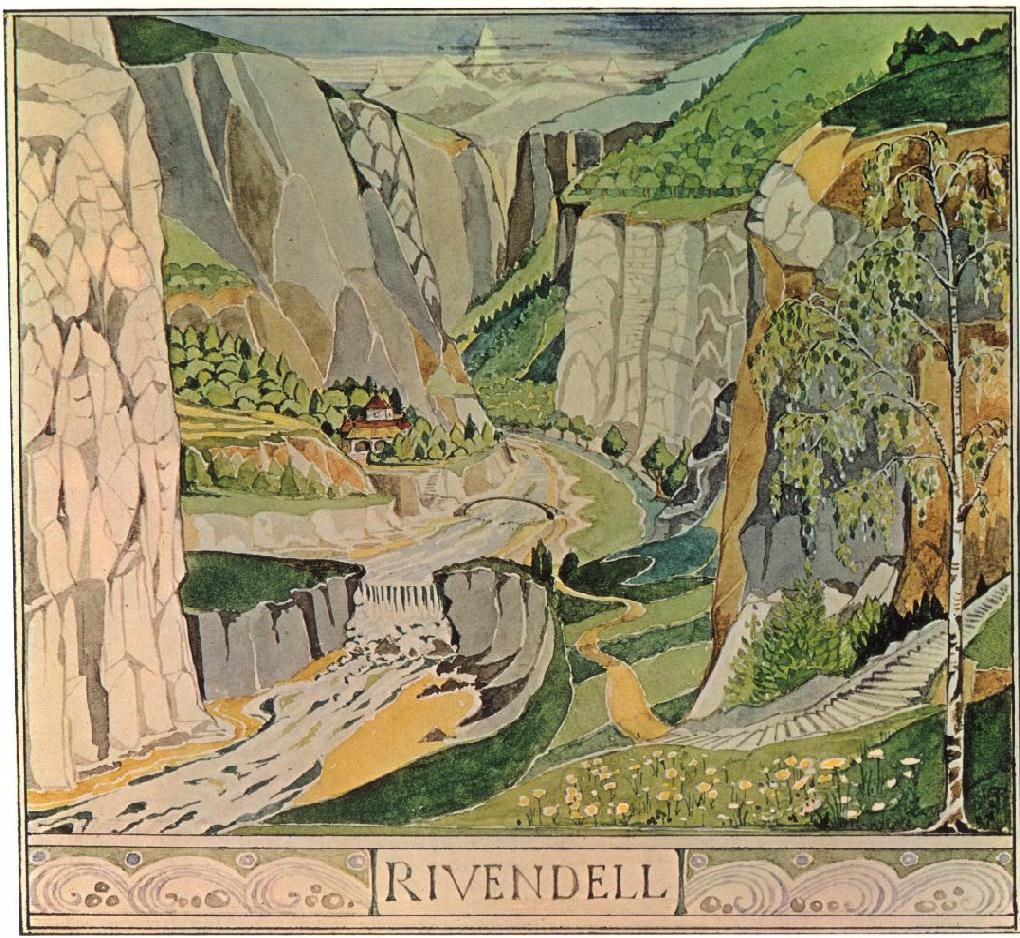 Landscape has always exalted my soul and fired my own imagination — and I am profoundly pleased and grateful that I actually live in a landscape that bears no small resemblance to Middle Earth.
So, Happy Twelthty-fifth birthday Professor Tolkien. My hat is ever off to you.

The Great War Online has a nice, concise recounting of Tolkien’s early life and service in the Great War.

deuce says
Great post, Jim! As you say, JRRT’s influence was profound and has woven itself into some pretty surprising places. One should never forget that Tollers was profoundly against empires, believing foremost that England should have never grasped for the ring of imperium. All this, from one born near the frontiers of South Africa, but raised in the county his ancestors had held for well-nigh 1500 years. In all things, he was a Man of the West and proud to say it.
JimC says
I have listened to Prof. Michael Drout’s lectures “Tolkien and The West” several times on my newspaper route. Drout is an Anglo-Saxon/Norse scholar following in Tolkien’s footsteps. It’s worth the time if you have some time behind the wheel to occupy.
Matthew says
You know it’s surprising how many Science Fiction and Fantasy writers were in war.
Lord Dunsany, the major fantasy writer before Tolkien and influence on Howard and H. P. Lovecraft, was in the Second Boer War and the First World War. He was in the Home Guard in the Second World War and survived the Battle of Britain.
William Hope Hodgson, another influence on Lovecraft, died at Ypres.
SF writers Gene Wolfe and Jerry Pournelle were in the Korean War. David Drake and Joe Haldeman were in Vietnam.
There are a few crime writers too. Raymond Chandler was in First World War and Tony Hillerman was in the Second. Hillerman won a Silver Star.
JimC says
I didn’t know Hillerman was awarded the Silver Star. My mom absolutely loved his work.
Matthew says
I don’t think it was really known until after he died. It’s surprising how little the heroes of WWII talked about that stuff. I’ve just finished To Hell and Back by Audie Murphy. No where in the book does Murphy mention winning any medals.
Hillerman was one of those authors that I did not really read until after his death. Like Donald Westlake or George MacDonald Fraser.
Paul McNamee says
Robert Adams (HORSECLANS fame) served in a tank unit in Korea, too.
Matthew says
C. M. Kornbluth won a bronze star at the Battle of the Bulge. His collaborator Frederic Pohl was stationed in Italy as an air corps weatherman.
https://en.wikipedia.org/wiki/Cyril_M._Kornbluth
Avram Davidson was a medical corpsman in the Pacific. I’ve heard he was in the Israeli War of Independence, but I may be wrong.
https://en.wikipedia.org/wiki/Avram_Davidson
This is becoming a list of writers in war.
deuce says
Our own John Maddox Roberts served in Viet Nam, as did Keith Taylor. Edgar Rice Burroughs rode with the 7th Cav in pursuit of Geronimo and reenlisted as the oldest US Army correspondent in WWII. He witnessed kamikaze attacks firsthand.
Of course, JRRT’s friend, CS Lewis, was wounded on the Western Front.
William Hope Hodgson died in WWI.
Hillbilly Nick says
Happy birthday Sir! J.R.R was and continues to be a big influence on my life and thinking. One of the best writers of modern times, if not the best!
Fletcher Vredenburgh says
Great piece and the usual great info from my fellow commenters. I didn’t realize it was JRRT’s birthday, but I’m swimming deep in his words lately. I’m in the middle of listening to the audiobook of The Two Towers, just finished The Children of Hurin, and am reading selections from The Silmarillion.
JimC says
Fletcher serves up a very fine piece on Children of Hurin at Black Gate.