“He could outstare a mad cobra or a rogue elephant.”
— His grandson’s description of Seth Bullock’s command presence.
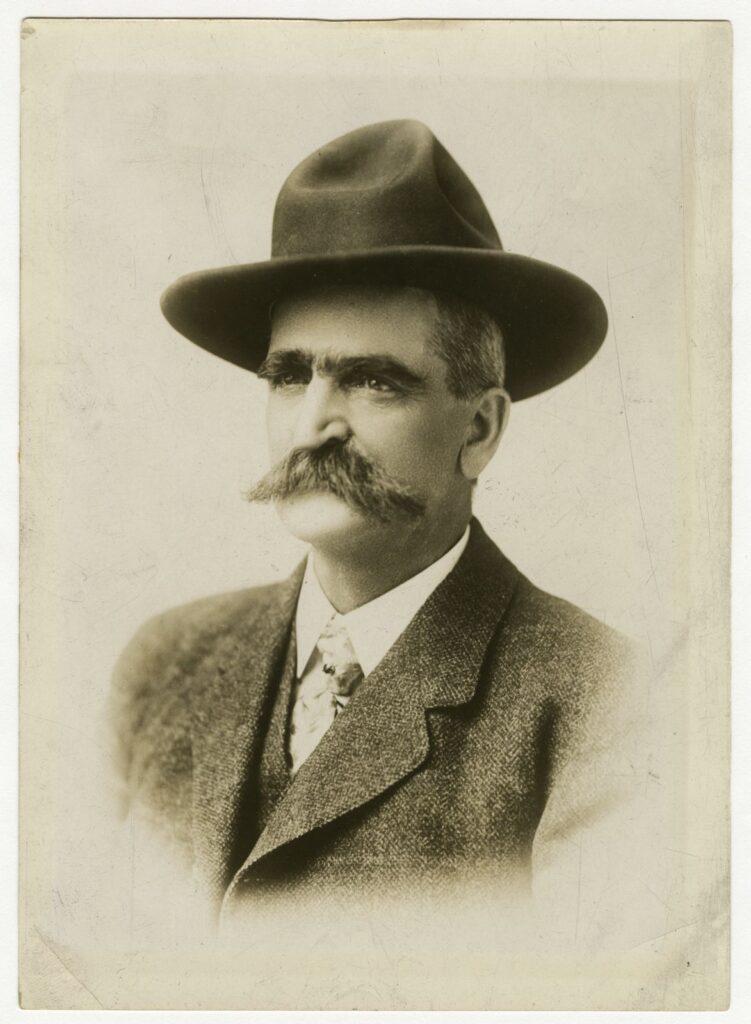
Lawman, entrepreneur, agricultural trailblazer, boon companion to a President of the United States — Seth Bullock lived a full and varied life on the late 19th century frontier. He was a tough lawman, but not a killer; there was no OK Corral and no Vendetta Ride in his story, which is why he had faded from historical memory while the like of Wyatt Earp remains a legend. Then David Milch featured him in HBO’s Deadwood. Seth Bullock was played with smoldering intensity by Timothy Olyphant — a volcano of barely suppressed rage that could erupt in savage beatings.
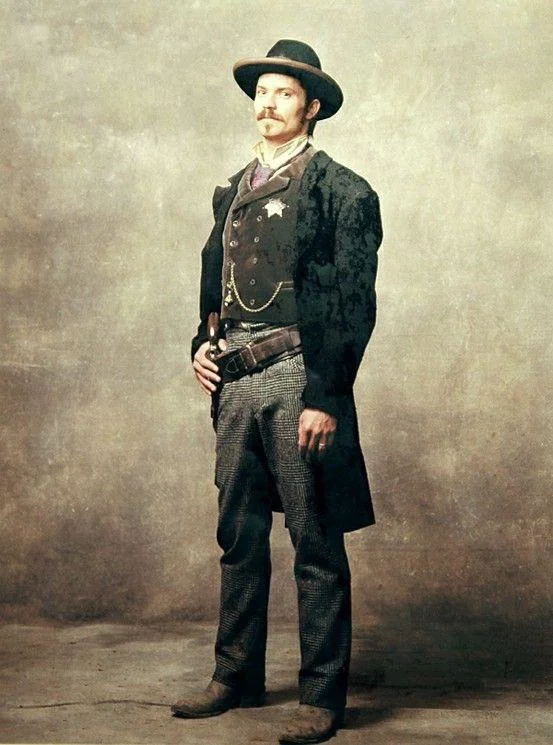
That brought ol’ Seth back into the public consciousness.
The historical Seth Bullock was born in Ontario, Canada. His father was a retired British Army Sergeant Major and a rigid man. As teenagers are wont to do, Seth rebelled, and ran off at the age of 16 to join his sister in Montana. She shipped him back home, but he left again at 18, this time for good. Seth may not have gotten along with his disciplinarian dad, but it seems likely that the old man shaped in Seth a strong sense of order — and a sense of duty to enforce it.
Bullock got into politics very early, serving in the Montana Territorial Legislature, and playing a role in the establishment of Yellowstone National Park. He was appointed sheriff of Lewis & Clark County, which encompassed some tough mining towns. One of his signal acts as sheriff was the apprehension of a horse thief named Clell Watson after a brief shootout. Bullock held off a mob with a shotgun to make sure that Watson hung under color of law, an incident that inspired the opening scene of Deadwood.
Bullock got into the hardware business with a German Jew named Solomon ‘Sol’ Star, who would become one of the West’s most respected businessmen. In 1876, they set out for a rich new mining camp in the Black Hills. A place called Deadwood.
The day after Bullock and Star arrived, Crooked Nose Jack McCall shot Wild Bill Hickock through the back of the head in the No. 10 saloon — about 150 feet from the lot where the newly arrived businessmen were to set up their hardware store. With a known background in law enforcement and an obvious command presence — steely eyes, a hard demeanor, and a mustache that rivaled Sam Elliott’s — Bullock was a natural choice to be tapped for law enforcement in a raw and dangerous camp.

Dakota Territorial Governor John Pennington appointed Bullock Sheriff of Lawrence County (which included Deadwood) and he set about bringing the town to heel. He did it by hiring tough and honest deputies who took no shit, and managed to pull it all off without killing anybody. One reason for his success is that nobody doubted that he would kill a man if the occasion demanded it. He was not bluffing, and he was not a man anyone wanted to take on.
It should be noted that “bringing the town to heel” means shutting down the murder-a-day violence and confining vice and its attendant crimes to the “lower end” district of town. The place remained rough for many years, and there were brothels there until 1980.
With Deadwood stabilized, Bullock sent for his wife Martha who had been living with her family in Michigan. Unlike in the show, Bullock and Martha were a love match from the beginning, and she immediately became a civic leader on the distaff side.
The politics of Deadwood worked against Bullock, and he lost two elections for the position, running as a Republican.
Seth turned his attentions to his business interests, which expanded to include ranching and the founding of the town of Belle Fourche, all in tandem with Sol Star. He was too good at being a lawman to be left to the private sector, though. He was appointed as a Deputy U.S. Marshal, and it was in that capacity that he first met Theodore Roosevelt in 1884, when the young rancher was acting as a Deputy Sheriff out of Medora, to the north of Deadwood. They were both pursuing the same horsethief, and bonded over beans and coffee, as the story goes.
They had a lot in common — a strong sense of right and wrong and the sand to make it stick in the roughest company.
It is said that Bullock hero-worshipped Roosevelt, but I think the feeling was mutual. Roosevelt was friends with and deeply admired men who represented a certain class of frontiersman — Frederick Russell Burnham and Frederick Courteney Selous come to mind — men who were doers and builders and who had a conservation ethic (Roosevelt had to have appreciated Bullock’s role in Yellowstone).
Anyways… the men struck up a lifelong friendship.

Bullock signed on to be a Rough Rider in the Spanish American War, but he never made it to Cuba. He rode in Roosevelt’s Inaugural Parade with a posse of 50 cowboys (including Tom Mix), and Roosevelt appointed the lawman U.S. Marshal for South Dakota in 1905.
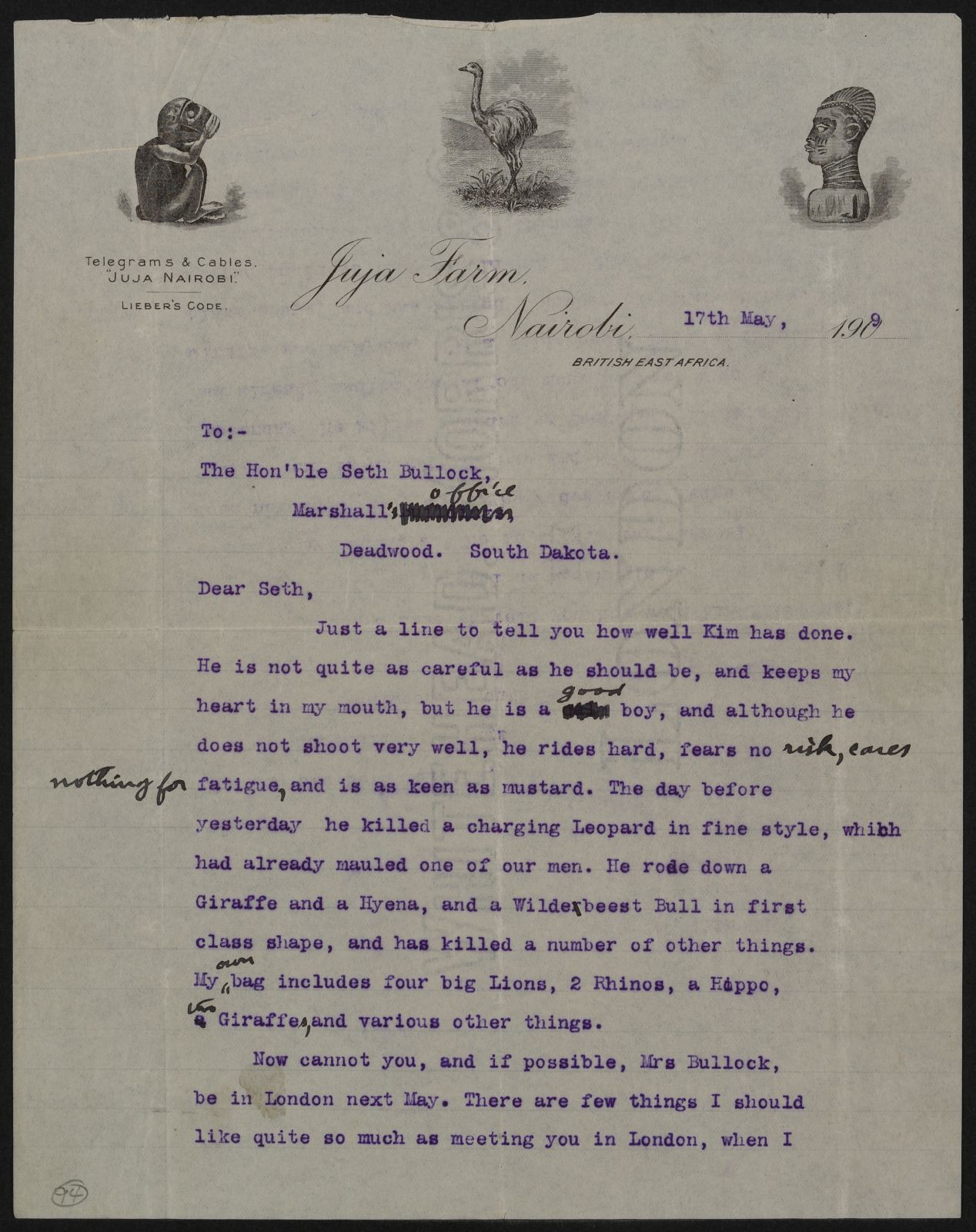
TR wrote letters to his friend in Deadwood while on his epic African Safari in 1909, including this note about his son Kermit:

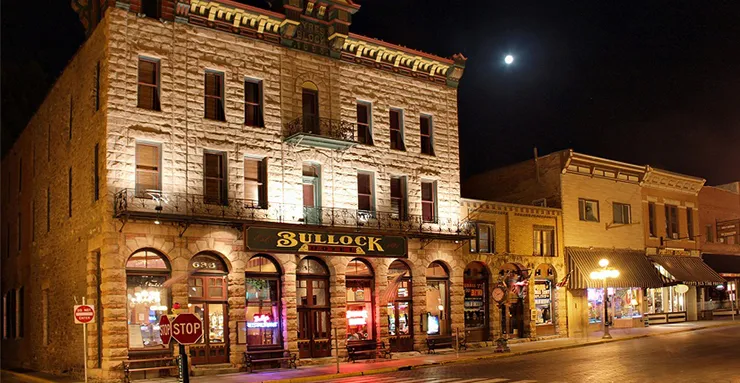
Bullock built the Bullock Hotel on the site where Star & Bullock Hardware had stood in earlier days — and the hotel is still in operation. Lady Marilyn and I are hatching a plot for a road trip to Deadwood, and we intend to stay there.
When TR died in 1919, Bullock commissioned a memorial to him on what would be thenceforth known as Mount Roosevelt. It was the first monument for the former president erected anywhere in the United States. Bullock would follow his friend up the trail in short order. He died of colon cancer on September 23, 1919.
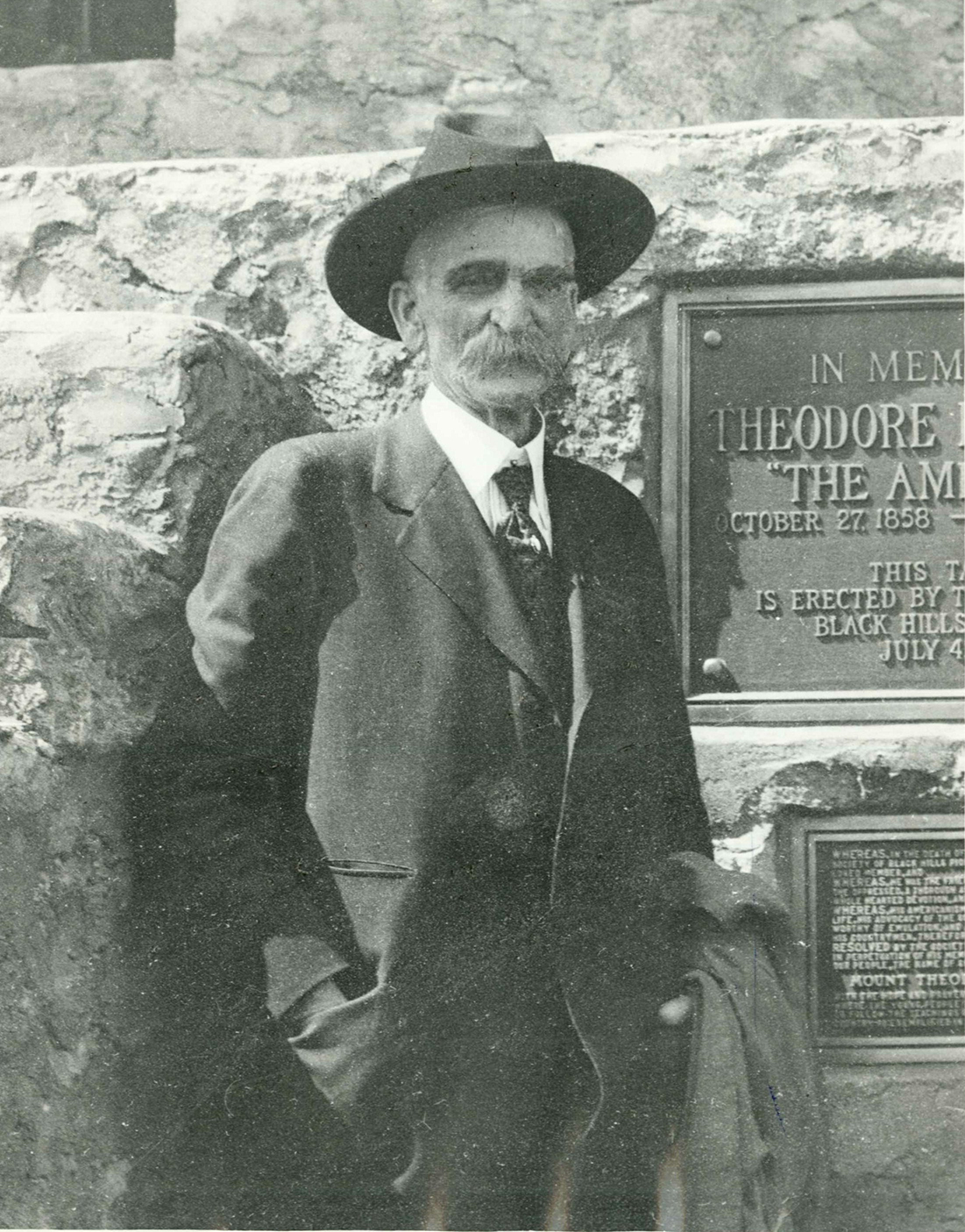
Seth Bullock well earned the accolade Roosevelt gave him, which serves as a perfect epitaph:
“Seth Bullock is a true Westerner,
the finest type of frontiersman.”
*

Andrew Wills says
Tough as nails!
Chas S Clifton says
You (and Wikipedia) omit that he was also the first supervisor of the Black Hills National Forest. As a little kid, I used to clamber up and down the wooden steps of the Seth Bullock fire lookout tower — but I never knew who he was then, because USFS is really bad at institutional memory.
Here is a transcript of a 1905 letter to Bullock from Gifford Pinchot.
https://foresthistory.org/research-explore/us-forest-service-history/people/chiefs/gifford-pinchot-1865-1946/letter-from-forest-service-chief-gifford-pinchot-to-forest-supervisor-seth-bullock/
JimC says
Thank you for that.
Ugly Hombre says
https://bhhistoricalsociety.org/
Great thread you will have a helluva good time in Dead Wood! I still have a “bull whip” I got there as a kid on a family road trip. it still works and cranks like a .22 lol.
https://bhhistoricalsociety.org/the-pioneer-story
“On the frontier, a good horse and a good gun were essential possessions of a life-saving nature, so it came as no surprise when three accused horse thieves were hung be vigilantes on “Hangman’s Hill” in Rapid City one day in June 1877.”
We need to bring back the horse thief Tx. imo most esp, for bicycle thieves.
There is a nice picture of Seth’s hide our gun in the pioneer story link.. wonder who has his Remington?
Brian H. says
I’ve been meaning to revisit Pete Dexter’s novel Deadwood. Quite a bit different from the series as I remember it but equally good. I think Deadwood might be the pinnacle of the legendary boom towns; The location within Paha Sapa, its founding right at our country’s 100 year mark, and the Shakespearean tragedy of Wild Bill. Throw in the politics and industry and the corruption therein, well…half the story of the West in one little gulch.
JimC says
X-ring.
Lynda A. Sanchez says
All, just for your information, the Wild West History Association’s March 2024 issue has Seth on the front cover and an excellent article as well so this guy gets around. Sure is distinguished looking and I am forwarding this info to their editor, Matt Bernstein. If you have not seen the Journal you need to take a look. I have referred to it before as one of the few really attractive and well done hard copy history magazines.
Article: Seth Bullock, Lawman, Entrepeneur and Civil Servant by David A. Wolff.
Check it out. Some great images too.
JimC says
Thanks Lynda. Gonna have to jump in on this.