
Exploring the intersection of insurgency and Frontier Partisan warfare leads down some strange paths. The cataclysmic events of the early part of the 20th Century can be viewed as an earthquake that had many aftershocks, some of which continue to rumble and shake to this day (Israel/Gaza and Ukraine being two salient examples).
The First World War was the great civilizational shock of the era, but social revolutions also had a seismic impact. The Mexican Revolution of 1910, for example. The MexRev was the first great upheaval of the era, and it was, in a way, folded into the larger conflict that emerged in 1914. The U.S. entry into the First World War was triggered by the interception and publication of the Zimmerman Telegram, a German attempt to incite the revolutionary Mexican government of Venustiano Carranza to attack the United States. There are conspiracy theories that Pancho Villa’s Columbus Raid was a German-incited operation. It’s not an outlandish notion, but it doesn’t stand up to a stress test. Villa had his on motives.
Anyways…
My expedition into the era of the Wild Bunch took me back to a weird and extremely violent aftershock of the MexRev: The Cristiada, aka, the Cristero War.

The conflict that erupted in 1926 and roiled Mexico into 1929 has been cast by most historians as an organic spasm of resistance to an assault on religious institutions and freedom — others see it as an attempt at a conservative counter-revolution. Both elements were present, but the fundamental popular resistance was the core of the matter. When the state goes after people’s faith, they are playing with fire.
The Constitutionalist faction that triumphed at the end of the Mexican Revolution was intensely anti-clerical, seeing the Catholic Church in Mexico as a locus of power that competed with the state. The Constitutionalists were centralizers who sought to consolidate power in the federal government, and such a competing power structure could not be tolerated. And, like most of the revolutionary movements of the 20th century, they viewed religion through a Marxian lens (even if they weren’t Marxists) as “the opiate of the masses,” as an oppressor of the people.
The Conventionist faction — Pancho Villa and Emiliano Zapata — had a more ambivalent outlook on religion. Villa seemed to alternate between hating the priest class and casting himself as a defender of faith, depending on political circumstances and who had pissed him off at any given time. The Zapatistas marched under the banner of the Virgin of Guadalupe, and Zapata himself wasn’t going to mess with their faith, even if he wasn’t a religious man himself.
Christopher Ohan, in a monograph titled The Role of the Catholic Church in the Mexican Revolution breaks it down this way:
…[T]he Carrancistas believed that the priests had turned the people against them by their own propaganda, and that all enemies were in the pay of bishops. He (Carranza) abhorred the accumulation of wealth he saw in the church. His plan for saving Mexico not only involved returning to a constitutional order, but also supporting a more equitable distribution of wealth. Infamous for its cruelty, Carranza’s army was feared by both supporters and nonsupporters of the church.
Concerning the church, Zapata’s stance seemed ambiguous. He is described as a conservative Catholic who wanted no quarrel with religion or the church. At the same time he could shoot a priest without hesitation. In the eyes of the church, Zapata was an anarchist who represented the excesses of the Revolution. Beyond his program of land distribution, Zapata had no agenda. Therefore, he was neither supported by nor an ardent supporter of the church.
Unlike Zapata’s take-it-or-leave-it attitude concerning the church, Villa was a staunch clerophobe. He once told an American reporter that he believed in God, but not in religion. After his break with Carranza, however, Villa reversed his attitude and became a defender of the church.
The Constitutionalists won, so they got to make the rules. The revolutionary Constitution of 1917 put the hammer down on the Church. It went further than the classical liberal separation of church and state; it fully subordinated the church to the state.
Ohan:
Although the new Constitution guaranteed the freedom of religious beliefs, it placed severe restrictions on religious practice. Article 24 stated that every religious act of public worship must be performed inside churches, which were under governmental supervision. The most devastating for the church, however, was Article 130. Under its provisions every aspect of religion in Mexico was subjugated to the supervision of the state. No longer could priests hear confession or legally perform a marriage ceremony. Not only were state legislatures made responsible for determining the number of priests in a locality, but priests could not speak or publish anything dealing with national political matters or “public information.” In addition, members of religious groups were banned from political participation and from owning or inhabiting land without government consent.
Alvaro Obregon was the last man standing among the great revolutionary generals, and he was a pragmatic man. When he assumed the presidency in 1920, his focus was on stability, on getting Mexico back on its feet after a decade of bloody revolution and civil war. He didn’t need to pick a fight with the Catholic Church by rigid enforcement of the provisions of the Constitution of 1917. That changed in 1926, when he handed the reins to Plutarco Elías Calles, a hardass who went right after the Church. For their part, the Catholic bishops were not in a compromising frame of mind; they didn’t want a separation-of-church-and-state model either — they wanted primacy for the church as in days of old.
Mexico had another powder keg fixing to blow.
The spark was provided when Calles, evoking Article 23 of the 1917 Constitution, suspended public worship. Priests, in turn, refused to offer the sacraments, in a bid to arouse public support for the church and resistance against Calles. This pushed things to a crisis point, and skirmishes grew into armed rebellion against the state. Calles responded savagely, sending Federal troops to enforce his writ, storming churches, executing priests, and generally pouring gallons of gasoline on a fire that spread through west-central Mexico.


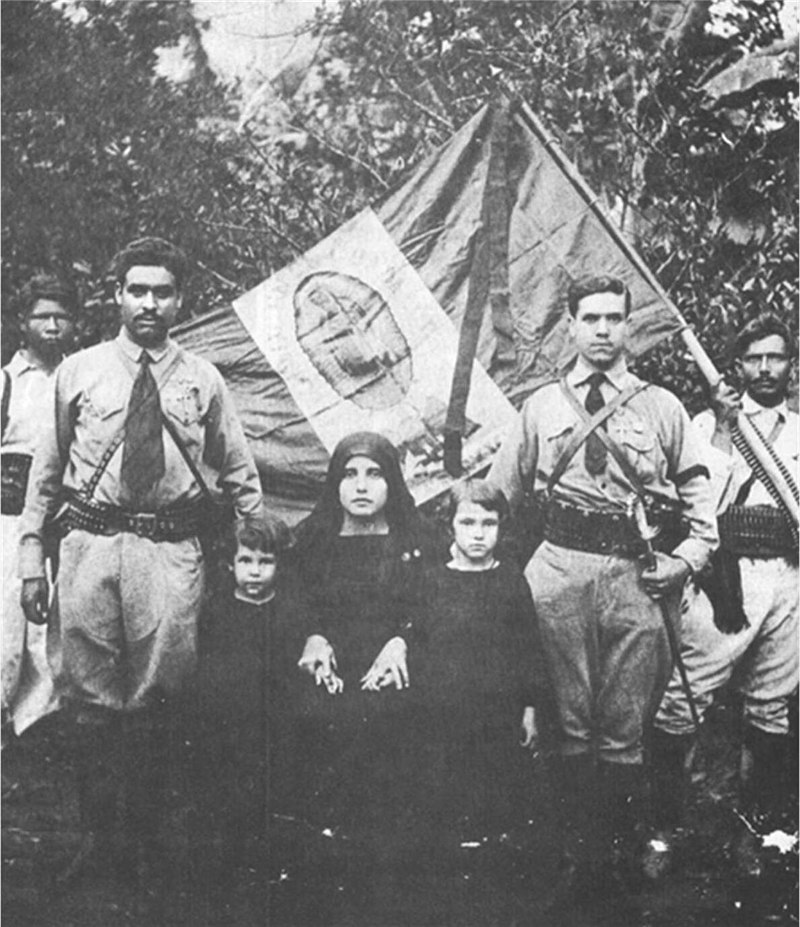
The hard corps of the Cristero movement — so known for their war cry “Viva Cristo Rey!” (Long Live Christ the King!) — were ranchers who were skilled at arms and on horseback. They were natural guerrilla fighters, and a nightmare for the Federales, as mobile bands of skilled marksmen always are. They were also poorly organized, and had no means of confronting the Federales in open battle, or taking and holding territory.
Members of the Cristiada movement, represented by the Mexico City-based National League for the Defense of Religious Liberty, recruited a former artillery officer who had served in the forces of the deposed military dictator Victoriano Huerta: Enrique Gorostieta Velarde. He was to organize and rationalize the Cristero forces into a real army.
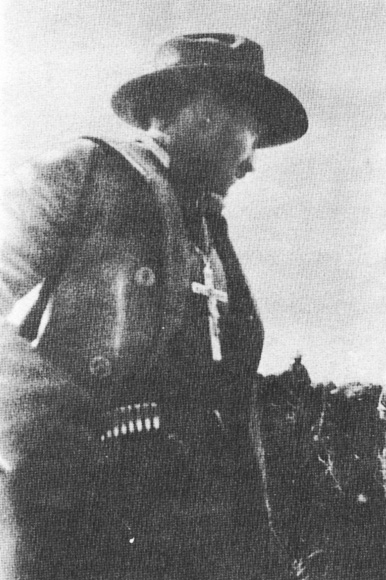
Gorostieta is an intriguing figure. After Huerta fell under the hammer blows of Pancho Villa’s Division del Norte in 1914, Gorostieta fled into exile in Cuba and then the United States. He returned to Mexico and went to work for a company that manufactured soap — a boring and diminishing gig for a soldier. He took the Cristero offer (for very good pay), even though he was not an ardent Catholic. The ardent-heartedness of the Cristeros both amused and annoyed him, and he occasionally acted quite contemptuously toward them.
Gorostieta has been portrayed as a cynical mercenary who led the Cristero uprising out of ego and ambition, hoping to parlay military triumph into political power, as had other generals in recent decades. That assessment appears to be sort of accurate as far as it goes — but it is incomplete. Gorostieta also apparently ardently believed in religious freedom, even though he didn’t buy into the deep faith of his followers. Despite having served in the military of a tyrant, he had a classical liberal outlook, promoting the separation of church and state but rejecting the subordination of the church to the state. Many Catholics insist that he experienced a genuine spiritual awakening during the Cristero War. It’s hard to discern whether that’s fact or folklore.
He was a successful leader. His forces, armed and supplied with the help of a cadre of dedicated women (known as the Joan of Arc brigades) handed the Federal army a number of stinging defeats, and the guerrilla campaign ground on Calles’s government, and brought down both domestic and foreign pressure on the president to end the war against his own people.
And a savage war it was. Both sides committed atrocities, including one notorious incident where Cristeros set a train afire, burning dozens of people alive. By the time it came to a negotiated end in 1929, the war had taken some 90,000 lives — 56,000 Federal troops, 30,000 Cristeros and a bunch of civilians.
Gorostieta didn’t live to see the end game. He was killed in a short, sharp firefight in in 1929. Historian Jim Tuck writes:
Gorostieta died as the result of an intelligence operation. At the head of a small party, he was on the way to Michoacán to recruit fresh forces. One of his group, Alfonso Garmendia, was ostensibly a pro-Cristero engineer. In reality, he was a mole, a federal colonel who had infiltrated the rebel movement. Tipped off about the party’s route, a cavalry unit descended on a farmhouse where Gorostieta was spending the night. Awakened by shots, he grabbed his pistol and stormed out the door to make for his horse. He was immediately cut down, his death ending the one of the most unlikely careers in military history.
The Cristeros had no hope of ultimately defeating the Federal Army, but the Calles government could not afford the perpetual running sore of a guerrilla war, either. The two sides came to an exhausted truce. Calles reverted to non-enforcement of the anti-clerical provisions of the 1917 Constitution, and the Church was allowed to reopen public services — much to the joy of the people. The Catholic Church would remain a significant spiritual force in Mexican society and culture, but it never regained its legal and political status and power.
*
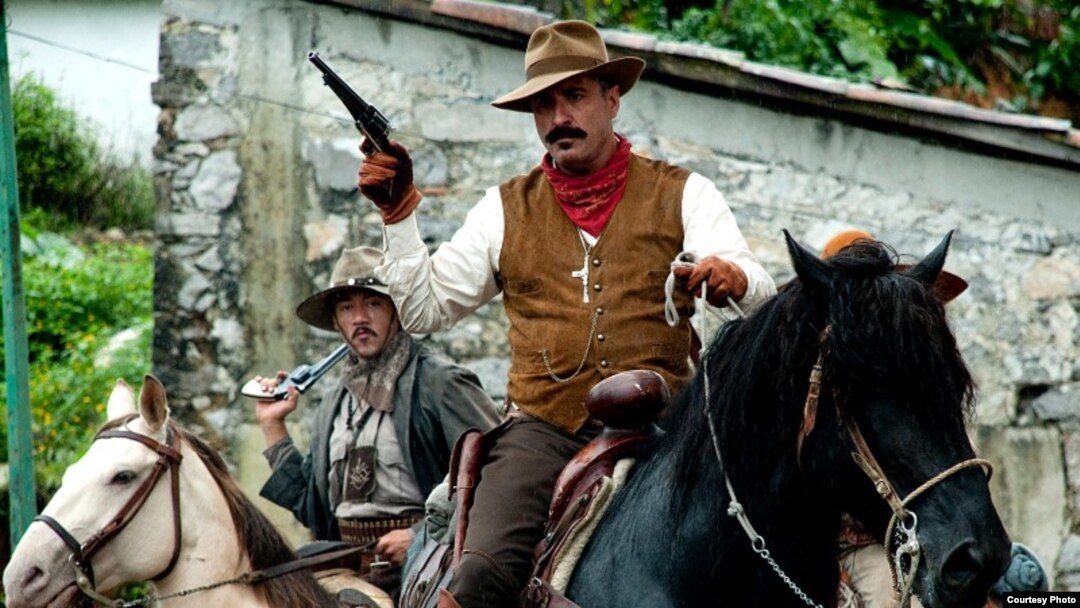
This tale was well-told in a 2012 movie titled For Greater Glory, starring Andy Garcia as Gorostieta. I saw it in the theater, which was pretty full thanks to a concerted campaign amongst Catholic advocates to get their people out to support it. It was a tale unknown to most, and it was interesting to see how deeply stirred the viewers were by the film.
Here is a solid doco on the history behind the movie. It comes from a Catholic and pro-Cristero point of view.

Matthew says
When the state starts curtailing religion it is a step toward tyranny. This has happen through out history. God, whether real or imagined, is a rival to those in power.
That doesn’t mean a Church can’t be tyrannous. I am skeptical of Big Church the way I am of Big Government or Big Corporations. Some of the best churches I’ve been a part of where the small ones. (There are exceptions to that.)
Clyde says
That old saying attributed to the 1905 book, “The Life of Reason or the Phases of Human Progress,” in which Santyana wrote: “Those who cannot remember the past are condemned to repeat it.”
Watch out for that revolving door my friends.
John Poorbull says
A friend from Jalisco told me that the little churches where he grew up are full of the bones of martyred Cristeros. Of course Obregon, as moderate and pragmatic as anyone in those troubled times, was plugged by a Cristero zealot.
Lynda A. Sanchez says
all, some really good info here and great images. Father Albert, a Franciscan missionary at St. Joseph Apache Mission located in Mescalero, NM helped some of the fleeing priests as they tried to escape often unjust accusations in Mexico. He knew this was a time of upheaval and cruelty and cleverly hid them for months.
mil gracias! Jim
Lynda A. Sánchez
Lincoln, NM
JimC says
And thank YOU Lynda.
David says
Great summary of a very interesting chapter in the history of maneuver warfare.
Emma Alvarez Gibson says
Thanks for this well-sourced and well-told account. My grandmother was still a teenager when she and her first two children—one a toddler; the other a newborn—had to quarantine with a handful of other families in Tepatitlán, Jalisco. (My grandfather was in Kansas and Ohio, building railroads.) One of the battles that’s prominently featured in For Greater Glory took place within hearing distance of the home where my grandmother and her babies were, and it was a singular experience to watch it play out on the screen. (Tragically, the infant became ill during the quarantine, and died not long after.)