This is … intriguing…
A parable of Frontier Partisan warfare and revenge, set in an unnamed country, clearly in the early decades of the 20th Century….
Without Blood is based on an Italian novella, directed by Angelina Jolie, and stars Salma Hayek and Demián Bichir.
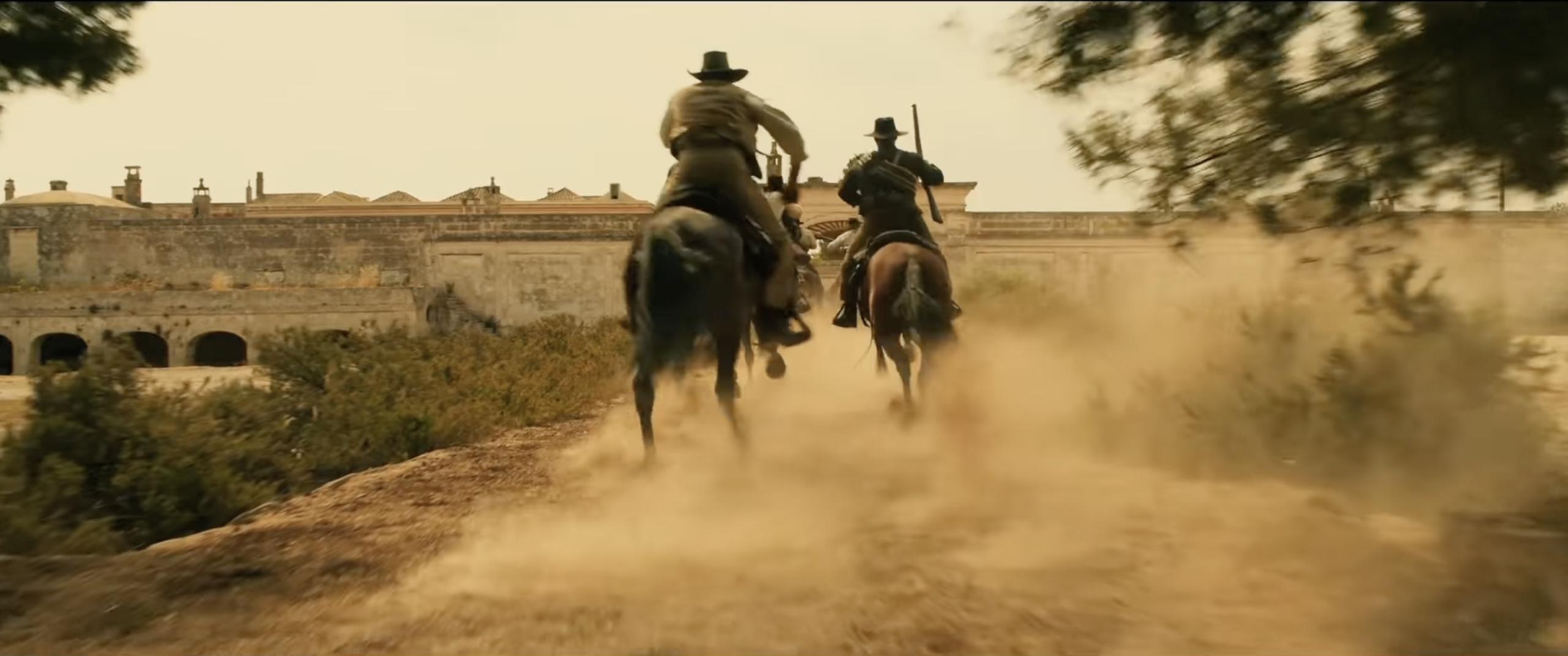
Per the Toronto Film Festival:
In a frontier landscape at the beginning of the 20th century, gunmen descend on a remote farmhouse, determined to exact revenge. Their target, a doctor — alone with his son and daughter — tries desperately to protect his children. Inevitably, bullets fly.
Years later, Nina engages Tito, a lottery seller, in what seems like casual conversation at his kiosk. But the encounter is anything but chance. It soon dawns on him. “I know who you are,” Tito says, “and I know why you’ve come.“ As their conversation continues, it becomes clear that revenge casts a long shadow, and takes many forms.

Strong MexRev vibes here… (UPDATE: Black Tyrone notes Cristero War vibes, too — which may be even more on point).
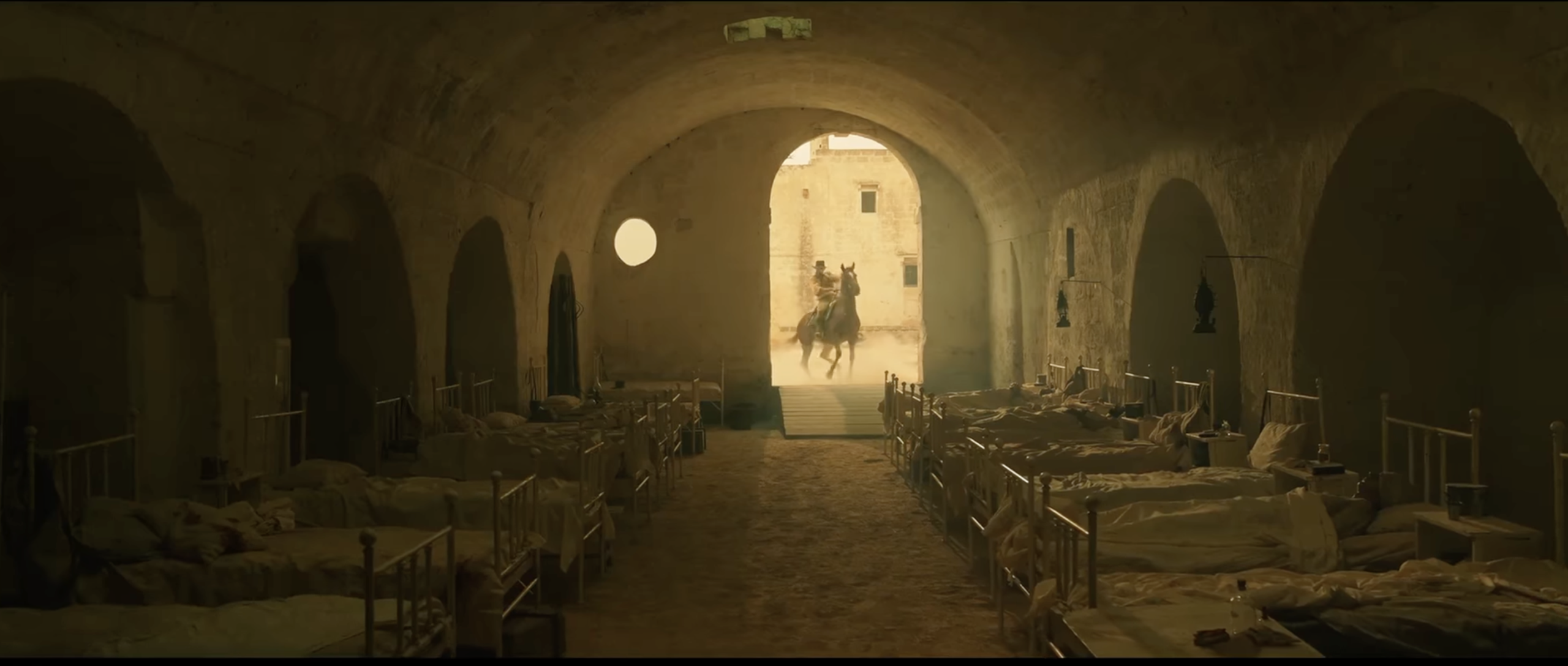
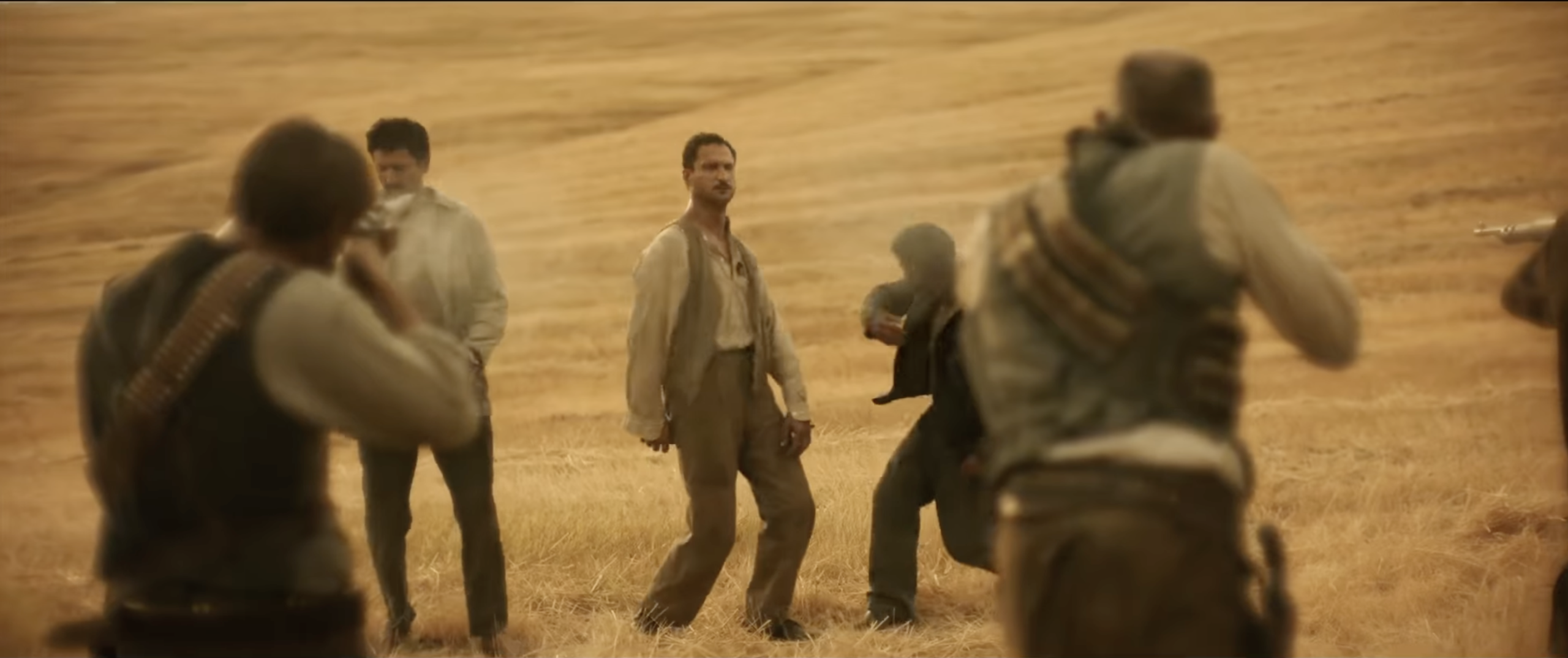
Six-guns, slouch hats, bandoliers and Mauser rifles. Anachronistic World War II-era Mauser rifles, but still…
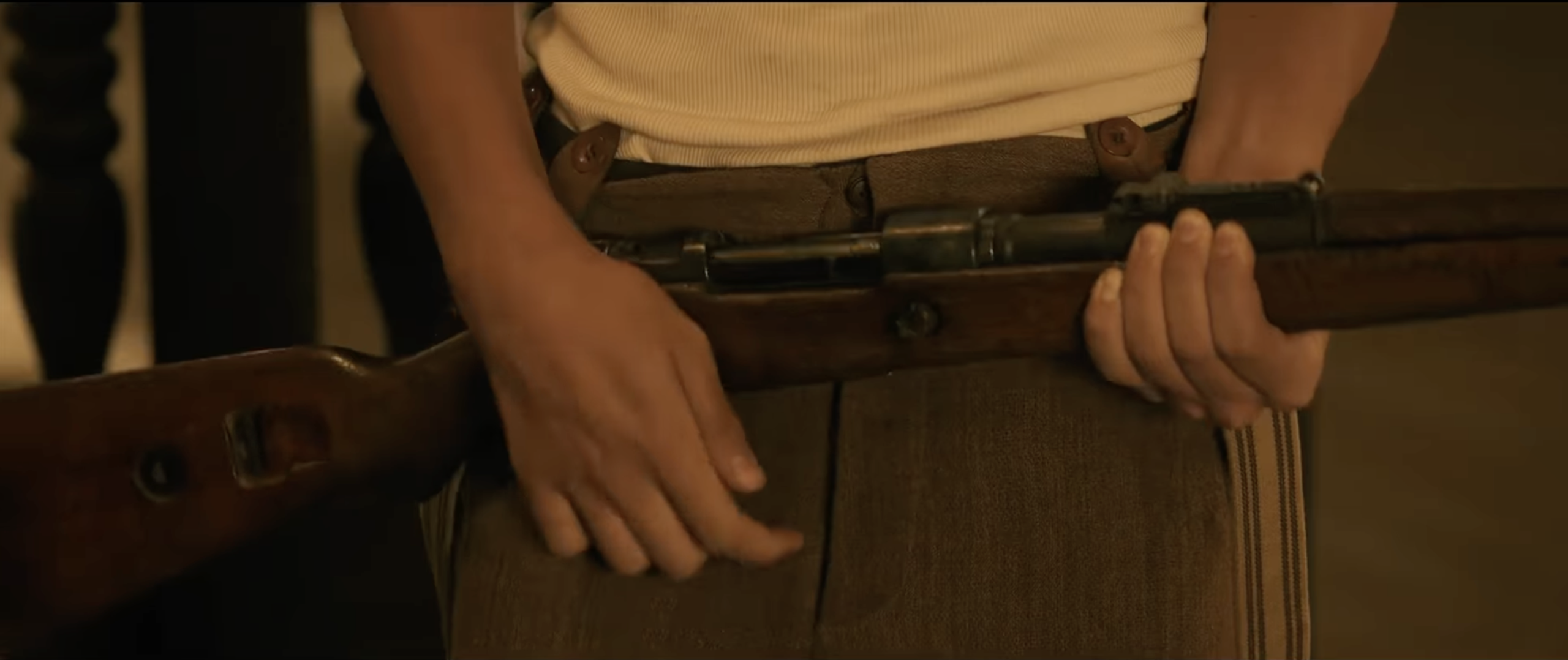
WTF is this thing?
The historical vagueness appeals to me — while at the same time, I really want to know what novelist Alessandro Baricco was mining. The era depicted is my favorite aesthetic and material culture in all of Frontier Partisans history, and I have secretly explored using a MexRev analog as a setting for a fantasy story. I refer to the MexRev as the Mexican Game of Thrones for reasons. I may yet go down that long, dark trail…
Anyways. I will, of course, investigate…

Matthew Ilseman says
A vague setting could be both liberating (not having to make every detail right) or infuriating vague.
I have a revenge story with supernatural elements set in feudal Japan published in Swords and Heroes 2
https://www.amazon.com/Swords-Heroes-Magazine/dp/B0H5D3WCLL/ref=sr_1_1?crid=T0W3NZ53BSZN&dib=eyJ2IjoiMSJ9.yQPPgjHzq7qskwPsJjoAqzg0o6kr-W3KGAM-d1pHfkfGjHj071QN20LucGBJIEps.z4HDRFvbqx6TdmLLJ5YjxFgc-inhDqNjzFkWf0P-6rI&dib_tag=se&keywords=matthew+ilseman&qid=1787324896&sprefix=matthew+ilseman%2Caps%2C310&sr=8-1
Revenge stories are powerful but in real life they seem to start cycles of violence that fall on the innocent.
Quixotic Mainer says
Aurelius would say “Before setting out on a journey of revenge, dig two graves.”
Paul McNamee says
Not much to be had from the foreword in the Kindle sample, other than the claim;
“The events and persons mentioned in this story are imaginary. The frequent choice of Spanish names is due purely to their music and is not intended to suggest a historic or geographical location of the action.”
But, given all you have laid out, I’m willing to bet there is more source than his imagination only.
Authors, man 😉
JimC says
Hmmmm… this is a kinda intriguing rabbit hole, ain’t it?
And, yeah, authors…
The Black Tyrone says
Christero War Mexico 1926-29? Just an off the wall guess
JimC says
Oooohhhh, yeah, that tracks.
David Wrolson says
Found a book that might hit somebody’s X-Ring here.
“Tracking the Weretiger: Supernatural Man-Eaters of India, China and Southeast Asia”
https://www.amazon.com/gp/product/0786472189/ref=ewc_pr_img_1?smid=ATVPDKIKX0DER&psc=1
>>>”Drawing on dramatic accounts by European colonials, and on detailed studies by folklorists and anthropologists, this work explores intriguing age-old Asian beliefs and claims that man-eating tigers and “little tigers,” or leopards alike, were in various ways supernatural. It is a serious work based on extensive research, written in a lively style.”<<<<
JimC says
Oh, THAT’s going in the queue…
Quixotic Mainer says
That looks like a fascinating flick, like you said it’s vagueness makes it even more appealing. Some frontier somewhere, as it turns into the larval version of our modern world in the aftermath of the gunsmoke.
I just got around to watching Rumors of War. They packed a lot of cinematography into a short film, and the Wampanoag looked phenomenal! Moseley got drug through the mud a little bit characterwise, but the actor portraying him did a great job selling villainy. He kind of shot for Jason Issacs but hit more of John Malkovich.
JimC says
Yes, they definitely posed Church as the “good” Ranger vs “bad” Moseley.
J.F. Bell says
Funny this comes up now, this and the coal wars discussion. Not least because I’ve bothered too many friends to count as regards the deep scars left in the American psyche from the latter – and not least because the coal pulled out the hills of Appalachia and the slopes of the San Juans (and the steel that resulted) were deciding factors in projecting sea power in the era of sails giving way to steam. No mines…no Great White Fleet, and no chance against the Old World.
Which, coincidentally, made a number of very distasteful people a very tidy profit. Freedom and brotherhood to the world and all the spoils of empire returning to Rome, one guesses. To borrow from an old favorite, paraphrasing from atop of a shattered hill in Cuba:
“Whatever we did here today…I hope it was not for the good of the sugar market.”
But also because I have a couple of projects rolled up in my back pocket that follow both; one a thin reskinning of the Colorado unrest, another in what may be Mexico in all but name around the same era, though I’m somewhat less enthused about the fantasy label as time goes on. Too much baggage, I think, and hardcast expectations. Magical realism seems the more practical choice. Mileage may vary, as ever.
…I also think we may have discussed this before, in part if not entire.
JimC says
Agree re: fantasy label. For one thing, it’s totally dominated at present by Romantasy, which definitely demands certain tropes. Personally, I’ve never been a big fantasy reader, though certain works obviously mean a lot to me. My own interests, both as a reader and for a couple of prospective writing projects, lie more in the direction of what you describe as magical realism — “real world” settings with an edge of the uncanny. That’s why I love the notion of “Fennario” as a place where history and folklore and the “weird” intersect — in our world.
I really dig the possibilities of using an unnamed country in a recognizable time period as a setting. There’s actually a term for this — Ruratanian Romance, after The Prisoner of Zenda.